Few people are strangers to the debilitating feeling of burnout and the accompanying desire for some time away. But a week at the beach doesn’t always fix the problem. You book the flight, pack the bag, and come home to the same fatigue waiting on your doorstep.
If your last vacation left you back at your desk just as tired as before you left, that’s something to consider. Vacations and wellness retreats are built to do different things, and neither one is the wrong choice. They’re just designed for different needs.
This comparison walks through what distinguishes the two, what a wellness retreat involves, and how to tell which one fits where you are right now.
Table of Contents
- What Is the Difference Between a Retreat and a Vacation?
- Do Vacations Make People Happier?
- How Long Do Wellness Retreats Usually Last?
- How to Choose Between a Wellness Retreat and a Vacation
- What Happens at a Sedona Mago Wellness Retreat
- Measurable Results: What Research Shows About Retreat Benefits
- How to Maintain Retreat Benefits After You Return
- Can You Combine a Retreat and a Vacation?
- Explore Sedona Mago Retreat & Wellness: Programs for Your Goals
What Is the Difference Between a Retreat and a Vacation?
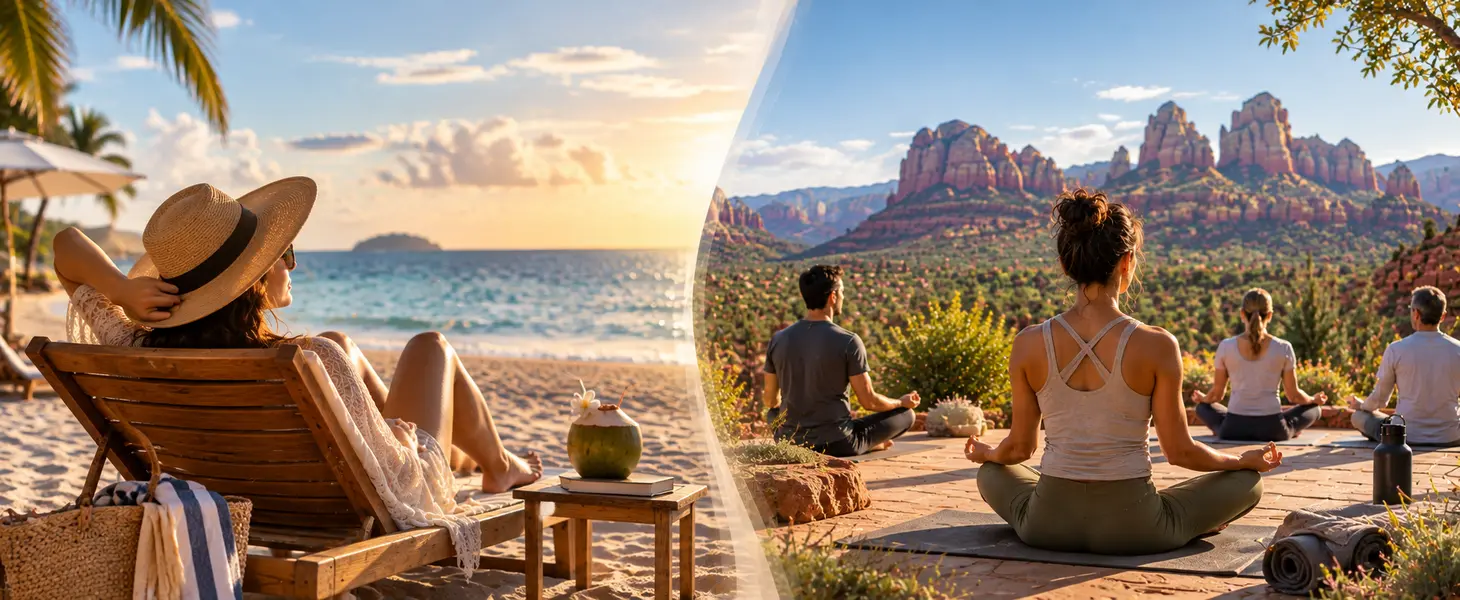
Vacations are built around escape, novelty, and exploration. Wellness retreats are built around structured, guided practices designed to help you reset and pick up tools you can use once you’re home.
A vacation gives you something new to look at, such as an unfamiliar city, an unexplored beach, or a different restaurant every night. That external stimulation feels good, and it often is good. But it doesn’t ask much of you internally.
A retreat works differently. Your days follow a set rhythm of movement, meditation, and reflection, led by someone trained to guide you through it rather than leaving you to figure it out alone.
The time itself is spent differently too. On vacation, unstructured hours are the point. On retreat, that same time gets filled with expert-led sessions built around a specific outcome: calmer sleep, less reactivity to stress, or simply space to think clearly again.
If a structured reset sounds like what you need right now, check out our wellness retreat options at Sedona Mago.
Do Vacations Make People Happier?
Yes, they generally do. Time away can lift your mood, give you something to look forward to, and help you return to daily life feeling refreshed. You don’t have to come home with a new routine for a vacation to have been worthwhile.
A wellness retreat can offer those same pleasures, with time set aside to focus on how you feel and what you need. Guided activities and space for reflection may help you discover practices you want to carry into everyday life.
The difference comes down to what you want from your time away. If you’re craving rest, a vacation may be exactly right. If you also want support in making changes that last beyond the trip, a retreat may be a better fit.
How Long Do Wellness Retreats Usually Last?
Retreats commonly run from a 2–3 day weekend to a 5–10 day immersion, with the longer window often cited as the point where the nervous system has time to actually downshift.
A short weekend can introduce you to practices like meditation or gentle movement, but a few days rarely gives your body enough time to fully settle. Longer stays allow more than a mental break. They give the parasympathetic nervous system, the part of your body responsible for rest and recovery, more sustained time to activate instead of briefly quieting down before you’re back on a plane.
How to Choose Between a Wellness Retreat and a Vacation
Think about what you want your time away to feel like, then consider what’s practical for this trip. How many days can you take off? What can you comfortably spend? And if you’re traveling alone, would you rather make your own plans or join a guided group? These factors can help you choose the experience that fits you best.
#1: How Much Time You Actually Have
You don’t need a week off to benefit from a retreat. If you have a long weekend, Sedona Mago’s Sedona Meditation Weekend gives you dedicated time to step away from your routine and explore guided practices.
With more time available, a longer wellness retreat offers room to settle in and try those practices over several days. When comparing options, consider how much of your time away you can spend free from work and other daily demands. That may matter more to your experience than the number of days you book.
#2: What Your Budget Realistically Covers
Retreat prices vary by length, accommodations, and what’s included. When comparing a retreat with a vacation, look at the total cost of each trip: lodging, meals, activities, transportation, and any additional fees. A retreat may have a higher upfront price but include expenses you would pay for separately on a vacation.
Check for costs such as flights, gratuities, and single-occupancy fees before you book. That will give you a clearer picture of which option fits your budget.
#3: Whether You’re Traveling Solo
Roughly 28% of wellness retreat guests attend alone. Structured programming removes the pressure of planning your own activities or finding people to do things with, since the itinerary and the group experience are already guided by facilitators. That’s a different kind of solo travel than showing up to an unfamiliar city alone and figuring out what to do each day.
What Happens at a Sedona Mago Wellness Retreat
Your experience will depend on the program you choose, but here’s what you can generally expect from the guided sessions, available support, and time spent at Sedona Mago.
Guided Movement and Meditation
Sessions at Sedona Mago are instructor-led. Tao Yoga, the practice used in Sedona Mago’s programs, emphasizes gentle, mindful movement over posture performance, so the focus stays on breath and body awareness rather than getting a pose “right.” Meditation sessions are explained step by step, including posture and breathing, so first-timers are always supported.
Programs Matched to Individual Goals
Not every guest wants the same thing out of a stay, and Sedona Mago’s program list reflects that.
Programs range from self-discovery formats like Finding True Self to detox-focused options like the Revitalizing Detox Retreat, so goals can differ significantly from one guest to the next.
You don’t need to be a Sun Tao practitioner to attend. The programs are designed for anyone seeking a reset, regardless of prior experience. Guidance adjusts to where you’re starting, from someone attending their first retreat to their fifteenth, and additional healing services are available for guests who want extra support during their stay.
A Setting Designed To Reduce Distraction
Sedona Mago sits in Arizona’s high desert, surrounded by red rock formations. Besides the setting’s striking aesthetic appeal, it has real physiological value.
Rooms without televisions or strong internet act as a built-in digital detox, limiting the reflexive urge to check a screen. Time spent outdoors is linked to lower measurable stress markers. Less noise and fewer competing stimuli make it easier to stay focused during program sessions and achieve positive results.
Measurable Results: What Research Shows About Wellness Retreat Benefits
Retreat outcomes aren’t just a feeling. Guided programs that combine movement, breathwork, and structured rest are linked to measurable shifts in sleep and stress levels.
- Sleep quality: Guests in structured wellness programs often report better sleep within days, tied to reduced blue light exposure and a consistent daily rhythm.
- Stress markers: Slower breathing and guided movement are associated with lower cortisol, the hormone your body releases under stress.
- Nervous system reset: Practices like Tao Yoga and meditation are linked to greater activity of GABA, a neurotransmitter that helps calm an overactive nervous system.
None of this means a single retreat erases months of accumulated stress. It means the specific practices used in a retreat setting (breathwork, movement, and consistent rest) are tied to measurable changes that a typical vacation schedule doesn’t cultivate.
How To Maintain Retreat Benefits After You Return
Retreat benefits can fade quickly without some plan for re-entry, in a way that’s different from vacation, where there’s rarely an expectation the good feeling should last past the first week back at work.
A retreat teaches specific practices, and those practices only keep working if you keep doing them. This doesn’t require an elaborate system. A short daily breathing practice (as little as five minutes in the morning) can be enough to notice a difference over a few weeks. A fixed no-phone window each evening does something similar for sleep. The goal is simply to keep one or two small pieces of it going.
Can You Combine a Retreat and a Vacation?
Pairing a retreat with a vacation, retreat first, is a sequence some travelers use so the vacation feels restorative rather than another source of stimulation on top of an already tired nervous system.
Seasonal pairing works well for people who don’t want to choose one over the other permanently. A retreat once or twice a year, with regular vacations filling the rest of the calendar, is a low-pressure way to use both without treating a retreat as an all-or-nothing lifestyle commitment. Some guests plan it the other way, too: a retreat at the tail end of a longer trip, once the sightseeing and travel fatigue have already caught up with them, to reset before heading home.
Ready for a Wellness Retreat Instead of a Vacation?
If you’re weighing a wellness retreat vs. a vacation, think about what you’d like to bring home from your time away. Sedona Mago Retreat & Wellness offers programs for different goals and schedules.
You don’t need prior experience to attend. Contact Sedona Mago Retreat & Wellness to talk through which program fits your goals.
Recent Posts