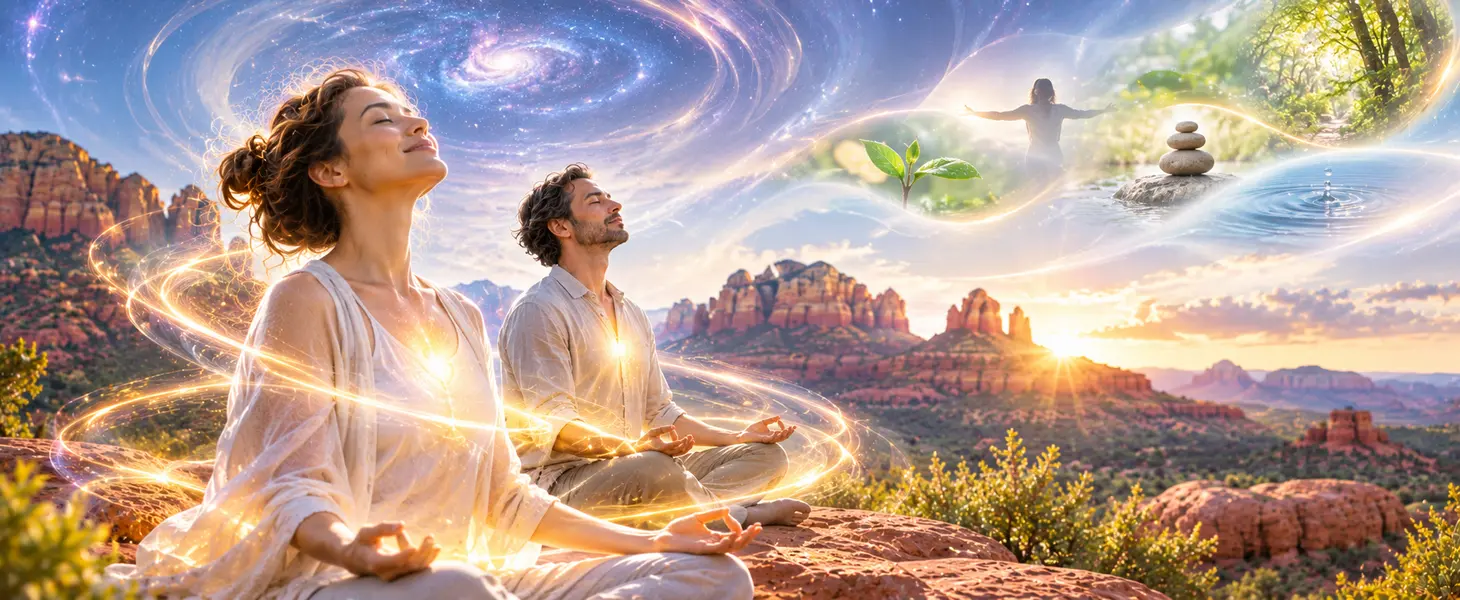
Many retreats mention “energy,” but few explain what it means. In a retreat setting, energy refers to felt states, such as steadier breathing, a calmer body, and sharper attention, that you can practice and build over time.
Imagine a retreat where an instructor explains the reason behind every practice. You don’t need a spiritual background, and nobody asks you to believe in anything. You simply learn techniques and notice what changes.
This article covers what an energy meditation retreat is, how it compares with other retreat types, what a typical day might look like, and more.
Table of Contents
- What Is an Energy Meditation Retreat?
- What Are the Different Types of Meditation Retreats?
- What Happens in a Meditation Retreat? A Sample Day
- 4 Energy Meditation Techniques You May Practice During Your Retreat
- What To Expect at a Typical Energy Meditation Retreat
- How To Choose the Right Retreat Space for Energy Meditation
- Plan Your Energy Meditation Retreat at Sedona Mago Retreat & Wellness
What Is an Energy Meditation Retreat?
An energy meditation retreat is a structured program where trained facilitators guide you through meditation, breathwork, and gentle movement. The practices are designed to help you notice, direct, and build subtle energetic states, such as warmth, tingling, or a settled calm.
The building part is called energy accumulation. It means developing those felt states through repeated, intentional practice, much like strength builds through regular training. In the body, it might look like you’re noticing your hands feel warm after a slow movement sequence, or that your shoulders drop after ten minutes of steady breathing.
There’s physiology behind this. Slow breathing is associated with greater activity in the parasympathetic nervous system, the branch that handles rest and digestion. That’s one reason a calmer body can follow a few minutes of deliberate breathing.
You don’t need to believe in “energy” or have any spiritual experience. Some people notice subtle sensations within a day, and others take longer. Both are normal.
Sedona Mago’s programs are guided by the essence of the Sun Tao, the spiritual lineage behind the center. It’s context for how the programs were built, and guests of any background are welcome.
Programs at Sedona Mago Retreat & Wellness are built around the individual, so your needs shape the experience. We’re open to anyone, including first-timers with no meditation background.
Contact us today to learn which program fits you, or give us a call to schedule your stay.
What Are the Different Types of Meditation Retreats?
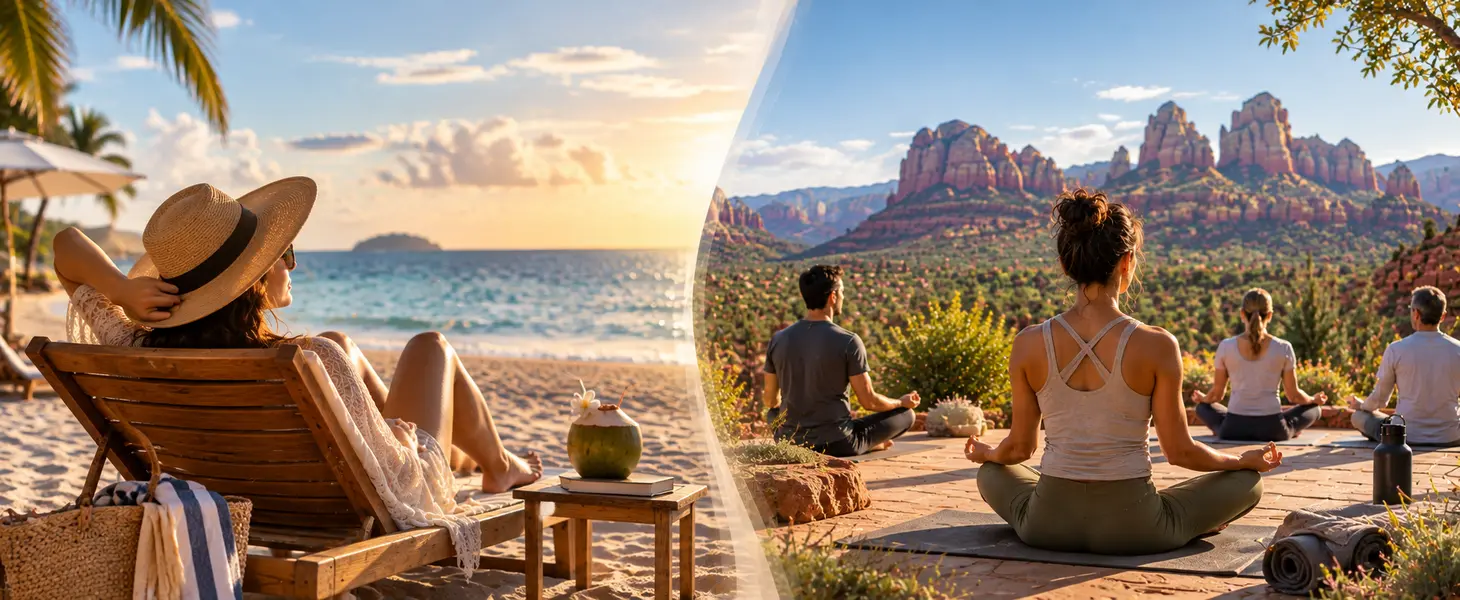
At one meditation retreat, you might spend much of the morning sitting in silence. At another, you might be on your feet, following an instructor through gentle movements and paying attention to how you breathe. Both give you time to practice meditation, but the days can feel quite different.
If you’re deciding which retreat to book, think about how you’d like to spend that time. A silent retreat gives you long stretches to observe your thoughts. A movement-based retreat lets you practice paying attention while you move. An energy-focused retreat brings meditation, breathwork, and movement together, and some programs also set aside time for guided self-reflection.
Silent Retreats
These retreats use extended silence and observation-based meditation. Days often involve long sitting periods with limited or no speaking. They suit people who want sustained, quiet self-observation.
Sedona Mago takes a different format, building scheduled quiet reflection into each day alongside guided instruction, rather than asking guests to stay silent throughout.
Movement and Yoga-Based Retreats
Here, the physical practice is the center. Sedona Mago specializes in Tao Yoga, which uses gentle, mindful movements. Sessions focus on alignment, mobility, and noticing where you hold tension, such as tight shoulders or shallow breathing.
Energy-Focused Retreats and How They Differ
Energy retreats layer meditation, breathwork, and movement toward one shared goal, so each practice supports the others. Instructors also explain why each practice works, which helps you repeat it at home.
Sedona Mago’s Self Empowerment Qigong Retreat is one example. Qigong is a traditional practice that pairs slow movement with controlled breathing.
Finding True Self adds structured self-reflection. Formats range from a shorter meditation weekend to a longer immersive stay.
What Happens in a Meditation Retreat? A Sample Day
Morning: Movement and Meditation Blocks
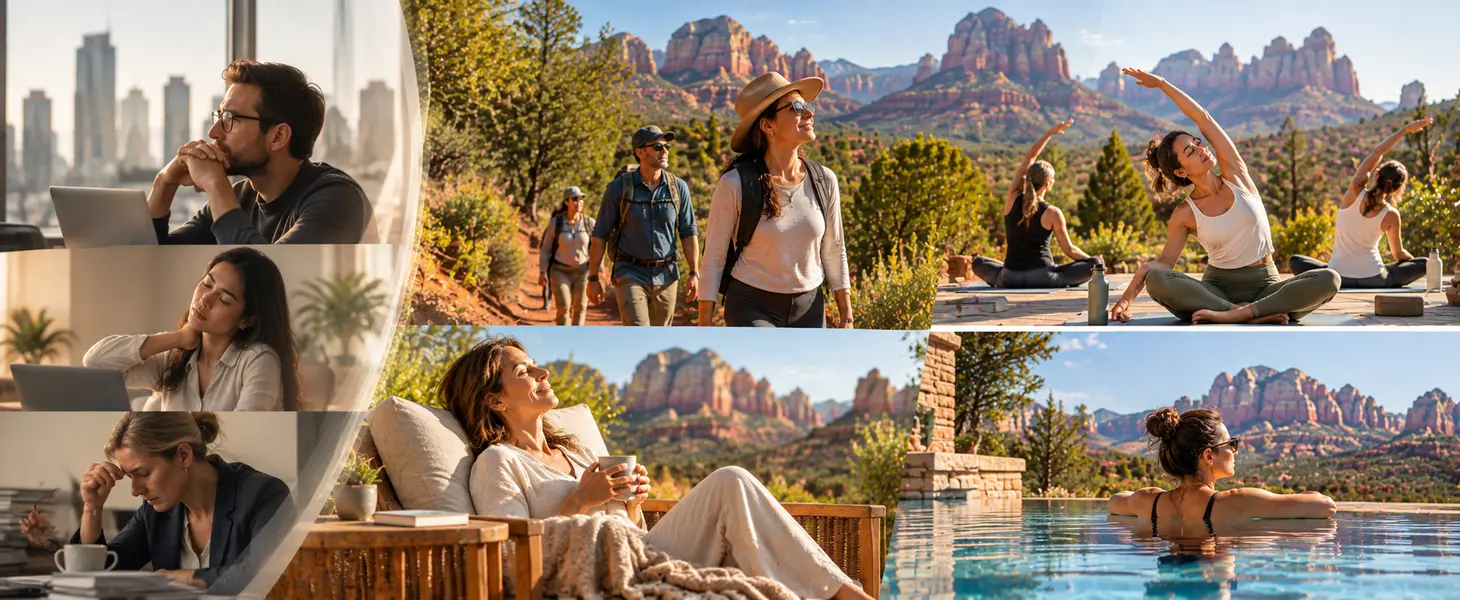
The day often starts with Qigong or Tao Yoga at sunrise in the high desert, when the air is cool, and the red rocks catch early light. A guided meditation block follows, with instructors walking you through posture and breathing.
Meditation is associated with measurable changes in brain activity, including in the default mode network, which is active when your mind wanders. Morning practice gives you a structured way to work with that wandering.
Midday and Afternoon: Breathwork, Meals, and Education
What does a breathwork session actually look like? Mostly, it’s quiet and simple. You might sit or lie down and follow counted inhales and exhales, such as breathing in for four counts and out for six, while an instructor watches and adjusts the pace.
An educational session on stress physiology may follow, so you learn what’s happening in your body. Meals are healthy and include vegetarian options. Rooms at Sedona Mago have no televisions and no strong internet, which makes it easier to stay unplugged between sessions.
Evening: Quiet Reflection and Integration
Evenings slow down. You might journal, sit outdoors, or join a short closing practice. This reflection time gives you space to absorb what you learned during the day.
Some days feel quiet and spacious, and others feel more active, with a lot to process.
4 Energy Meditation Techniques You May Practice During Your Retreat
#1: Qigong
Qigong combines slow, deliberate movement with steady breathing. Research suggests it may improve balance and proprioception, your sense of where your body is in space.
A basic movement has you raise your arms slowly as you inhale and lower them as you exhale. You may notice warmth or a light pulse in your hands, or a looser feeling across your shoulders.
#2: Diaphragmatic Breathing
This is slow belly breathing.
As you inhale, the diaphragm (the dome-shaped muscle under your lungs) moves down, and your belly expands. The breath slows as a result.
Slow breathing is linked to vagal tone, a measure of how well the vagus nerve supports your body’s calming response. It takes no equipment, so it’s easy to repeat at home.
#3: Guided Visualization
Guided visualization means directing your attention with an image or sensation. An instructor might ask you to picture warmth moving slowly down your arms, giving your mind one specific thing to follow.
Practiced regularly, meditation training is associated with improvements in attention and working memory.
#4: Mindful Movement and Body Scanning
A body scan moves your attention from your feet to your head, one area at a time, noticing tension or sensation without trying to change it. It builds awareness of where you tend to hold stress. Tao Yoga is a gentle way to practice this, since its slow movements give you time to notice.
You may feel heaviness, lightness, or nothing distinct at first. That’s a normal starting point.
What To Expect at a Typical Energy Meditation Retreat
The first morning session usually begins with an instructor explaining posture and breathing step by step. Nobody expects you to know anything beforehand.
Sensations vary a lot from person to person. Some people feel little at first. This works best when you approach it with curiosity.
Here’s what participants commonly notice:
- A slower, steadier breathing rhythm
- Easier focus during meditation blocks
- Arms or legs feeling heavier or lighter after movement
- A calmer feeling at the end of the day
Some people also find these practices may help with sleeplessness. Time away from screens may play a part, since light from devices in the evening is associated with disrupted sleep timing.
Retreat-style settings have also been studied for stress markers, including cortisol, a hormone the body releases during stress. Some research points to lower levels in structured, nature-based settings, though results vary.
While research on energy-based therapies is still developing, these practices may complement other approaches to stress management and overall well-being.
How To Choose the Right Retreat Space for Energy Meditation
Start by thinking about what you’d like to practice. Maybe you want to learn a breathing exercise you can do at home, try moving meditation for the first time, or spend a few days with fewer distractions. Once you have a goal in mind, look at how the retreat is taught and what a typical day includes.
The setting can shape what you notice during practice. At Sedona Mago, mindful walks and outdoor sitting give you time among the red rocks and open sky to pay attention to things you might miss on a busy day, like when your breathing gets shallow or where you hold tension. Those are observations you can keep making when you get home.
As you compare programs, consider these questions.
- Teaching approach: Do instructors explain the purpose of each exercise and show you how to practice it at home?
- Beginner support: Can instructors adapt the movements or meditation exercises to your experience and comfort level?
- Program length: Would a weekend give you enough time to get acquainted with the practices, or would you prefer several days to repeat them and ask questions?
- Setting: Does the schedule give you time outdoors or a quiet place to practice away from screens?
- Personal goals: Is there time to focus on what brought you to the retreat, whether that’s learning a specific technique or making room for self-reflection?
Contact the team at Sedona Mago with these questions to learn how each retreat is taught, what a typical day looks like, and whether the program is a good fit for what you’d like to practice.
Plan Your Energy Meditation Retreat at Sedona Mago Retreat & Wellness
Sedona Mago is a non-profit, non-denominational center near Sedona, Arizona. It’s open to anyone, with programs designed around the individual and grounded in practical, explained practices you can use at home.
Whether you’re looking to make time for yourself, explore energy meditation, or develop new ways to manage everyday stress, a retreat offers an opportunity to step away from familiar routines and focus on your well-being. Time spent in a peaceful natural setting can also create space for reflection, mindfulness, and a deeper connection with your body and surroundings.
You don’t need prior experience with meditation or energy practices to get started. The goal is to explore techniques at your own pace and discover what feels meaningful to you.
Visit our website to explore programs, or give us a call to schedule your stay. Find the space to slow down, learn something new, and bring practices that support a greater sense of balance into your daily life.
Recent Posts