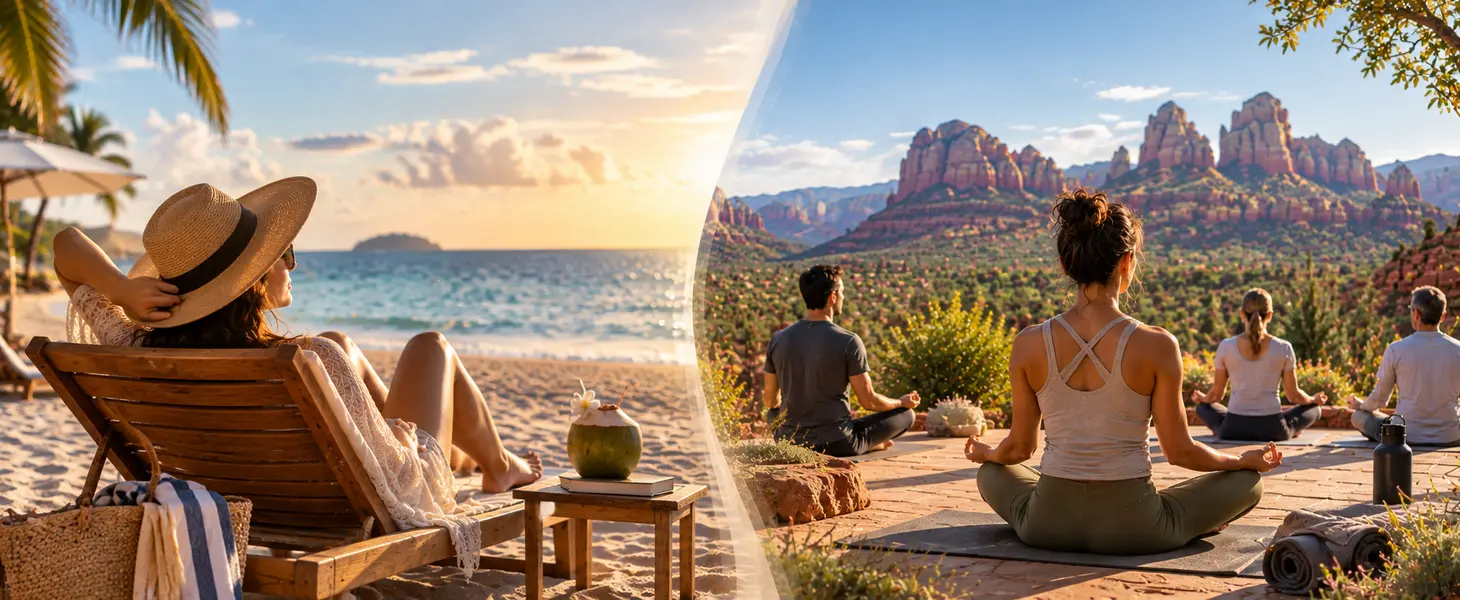
You already meditate. Maybe it’s a corner of your bedroom, a quiet chair before the house wakes up, or a few minutes on a lunch break. And yet something feels incomplete. Sometimes the stress dissolves slowly, if at all, and your mind finds its way back to yesterday’s emails.
The environment you’re in isn’t neutral. It’s either working with your practice or against it. Natural settings can do things to your nervous system that no indoor space can replicate, and understanding those mechanisms changes how you think about where you meditate, not just how.
This article explains the neuroscience behind outdoor meditation, what it takes to design a space that actually supports your practice, and where to go for the ultimate outdoor meditation retreat.
Table of Contents
- What Is Outdoor Meditation?
- 3 Ways Nature Can Help Calm Your Mind and Body
- Does Outdoor Meditation Actually Work Better?
- 4 Design Elements You Can Employ To Help Make Outdoor Meditation Work
- How to Design Your Space for Your Meditation Practice Type
- Experience Outdoor Meditation at Sedona Mago Retreat & Wellness
What Is Outdoor Meditation?
Outdoor meditation is the practice of mindfulness or focused attention in a natural outdoor setting. You might be sitting, walking, or standing in a space designed to minimize distractions and deepen sensory connection to nature.
Research shows meditating outdoors may activate your parasympathetic nervous system more effectively than indoor practice, thanks to natural light, fresh air, and plant compounds.
The key focus here is on being intentional. Sitting on a patio with loud music blaring nearby is technically being outside.
But outdoor meditation is something else: a space and a practice calibrated to let your nervous system actually settle. That distinction matters because design quality determines how much of the neurological benefit you capture.
At Sedona Mago, this philosophy shapes how every retreat program is structured around the individual, not the technique. The environment is part of the design instead of an afterthought.
3 Ways Nature Can Help Calm Your Mind and Body
Meditating outdoors offers more than a peaceful backdrop. Natural environments can influence the way your brain and nervous system respond to stress, making it easier to settle into a focused, present state. While meditation can be practiced almost anywhere, spending time outside may help your body relax before you ever take your first deep breath.
#1: Nature Helps Shift Your Body Into a Calmer State
One reason outdoor meditation feels different is that nature can encourage your nervous system to move out of “fight or flight” mode and into the parasympathetic, or “rest and digest,” state. Natural settings with open views, softer lighting, fresh air, and fewer artificial distractions give your brain fewer reasons to stay on high alert. As your body relaxes, it often becomes easier to focus your attention and stay present during meditation.
Natural light also plays an important role. Morning and midday sunlight helps regulate your circadian rhythms in ways artificial indoor lighting cannot, supporting healthy sleep-wake cycles and promoting calmer, more attentive states throughout the day.
Landscapes with natural colors and wide-open scenery, like the Red Rock surroundings at Sedona Mago, can also reduce the visual overstimulation that often keeps the mind busy and reactive.
#2: Plants Release Natural Compounds That May Reduce Stress
Trees, shrubs, and many other plants release aromatic compounds called phytoncides. Research suggests breathing these natural compounds may help lower cortisol, the body’s primary stress hormone, while also supporting immune function.
This is one reason the Japanese practice of shinrin-yoku, or forest bathing, has become widely studied as a way to promote relaxation and overall well-being.
But you don’t have to hike through a dense forest to experience these benefits. Even spending time in a garden or quiet outdoor space with plants such as lavender, rosemary, or native shrubs may provide some exposure while creating a more peaceful setting for meditation.
#3: Natural Spaces Can Restore Mental Focus
If you’ve ever noticed your mind feels clearer after spending time outside, there’s research to support that experience. Attention Restoration Theory suggests that natural environments help replenish the mental energy we constantly use to:
- Concentrate
- Solve problems; and
- Process information throughout the day
Unlike busy indoor environments filled with screens, traffic, and notifications, nature gently holds your attention without demanding it, allowing your brain to recover.
Morning sunlight may also help regulate healthy cortisol rhythms, helping you feel more alert earlier in the day while supporting a calmer baseline later on. Together, these effects can make it easier to settle into meditation with greater focus and less mental effort.
If you’d like to experience the benefits of meditating in a thoughtfully designed outdoor setting, our Sedona Meditation Weekend offers guided meditation sessions surrounded by Arizona’s inspiring Red Rock landscape. It’s an opportunity to experience firsthand how a peaceful natural environment can deepen your meditation practice while supporting relaxation and mindfulness.
Does Outdoor Meditation Actually Work Better?
Short answer: the research says yes, but only if the space is designed to support it. Sitting on your front porch while your neighbor mows the lawn or runs a leaf blower probably won’t activate your parasympathetic system.
The design is the variable most people overlook.
Over 92% of people who meditate do so primarily to help in dealing with stress. Research suggests combining mindfulness with natural settings, such as doing their meditation outdoors, may produce stronger outcomes than indoor practice alone, because the environment is reducing stress load at the same time, not just giving you a place to sit.
Knowing why it works clarifies what to build into your practice.
4 Design Elements You Can Employ To Help Make Outdoor Meditation Work
Every element in a well-designed outdoor meditation space supports your nervous system. This isn’t just about aesthetics. It’s about removing the distractions and stressors that keep your mind and body from settling into a meditative state.
#1: Reduce Noise and Distractions
Sound management is the single most consequential decision when creating an outdoor meditation space. Neighbor noise and traffic actively interrupt the neurological shift that makes meditating outdoors more effective than indoors. Your amygdala responds to unexpected sounds the same way it responds to threats.
A corner of the yard with solid fencing, dense plantings, or a structure on two sides can significantly reduce perceived noise.
Sedona Mago’s campus reflects this principle directly: guest rooms have no televisions or strong internet, and the surrounding open desert acts as a natural sound buffer. That’s not accidental; it’s intentional environmental design.
#2: Use Plants to Create a Calming Environment
What plants are best for meditation gardens? Lavender, rosemary, and native or evergreen shrubs are your best starting choices. Each serves more than one function:
- Lavender: Aromatic compounds shown to support a calmer stress response; drought-tolerant and low-maintenance
- Rosemary: Dense enough to screen sight lines; releases phytoncides when brushed or warmed by the sun
- Evergreen shrubs: Year-round visual privacy and sound dampening, no seasonal bare patches
These plants can act as a privacy fence and a stress-reduction tool at the same time.
#3: Make Your Meditation Space Comfortable Year-Round
Without seasonal planning, a meditation space sits unused for months. Shade structures such as pergolas, gazebos, or simple shade sails extend year-round usability without requiring year-round replanting.
Deciduous trees offer passive climate management: shade in summer and filtered light in winter. A pergola with slatted coverage can diffuse midday sun by 30–45%, making afternoon practice viable in warmer months. For wet or cold climates, a three-sided structure with a weatherproof roof can extend usable weeks well into the shoulder seasons.
#4: Create a Space That Works for Your Practice
As little as a 6×8 ft intentionally designed corner can support a full sitting or breath-focused practice. The minimum viable setup includes:
- A stable level surface
- One side of privacy screening
- Overhead shade
- A single focal point, such as a stone, small water feature, or container planting
Walking meditation requires more room. A 15–20 ft clear path is sufficient for a simple circuit.
Different practices have different spatial requirements, which is worth understanding before you set anything in place. The Tao Living Meditation program at Sedona Mago is a useful reference for how contemplative movement practice shapes spatial needs.
How to Design Your Space for Your Meditation Practice Type
A space designed for seated breath-work requires stable, level surfaces and wind protection. A dedicated Qigong space needs open area and consistent textures underfoot. Most design guides skip this distinction entirely, which is why many outdoor spaces may get used twice and then ignored.
Sitting and Breath-Focused Practice
Still, seated practices need a stable surface, wind protection that doesn’t feel enclosed, and a fixed focal point that anchors attention. A stone arrangement, plant grouping, or small water feature all work.
Seating height matters more than most guides acknowledge: a zafu cushion sits 3–6 inches off the ground; a low bench works better for practitioners with knee discomfort. Face away from sight lines that invite distraction.
Walking Meditation
A 15-ft straight path or small circular loop is sufficient. The surface should be consistent throughout. Mixed textures like gravel shifting to grass, then pavers, interrupt attention rather than support it. Soft underfoot materials like bark, packed gravel, or close-cut grass are preferable to hard pavement for longer sessions.
Qigong and Mindful Movement
Qigong is a practice combining slow, intentional movement with controlled breathing to build balance and focus. It requires a minimum 8×8 ft open area with no overhead obstructions and a level, grounding surface underfoot. Bare grass, smooth stone, or packed earth supports the proprioceptive awareness that Qigong develops.
If you’re considering establishing a dedicated outdoor movement practice, Sedona Mago’s Self Empowerment Qigong Retreat demonstrates how spatial and environmental design directly supports this practice.
Experience the Benefits of Outdoor Meditation at Sedona Mago Retreat & Wellness
Creating an outdoor meditation space isn’t just about aesthetics. It’s about giving your nervous system the conditions it needs to relax, focus, and fully engage in your practice. Natural light, thoughtfully placed plants, peaceful surroundings, and intentional design all work together to create an environment that supports deeper meditation.
If you’d like to experience that kind of setting before creating one at home, Sedona Mago Retreat & Wellness offers immersive experiences built around intentional, thoughtful retreat design. Every aspect of the campus is designed to encourage reflection, mindfulness, and meaningful connection with nature, allowing you to experience firsthand how your environment can shape your meditation practice.
Whether you’re new to meditation or looking to deepen an established practice, our programs provide guided instruction in a peaceful outdoor setting designed to help you slow down, reconnect, and recharge. Explore our available retreats and contact us to reserve your spot.
Recent Posts