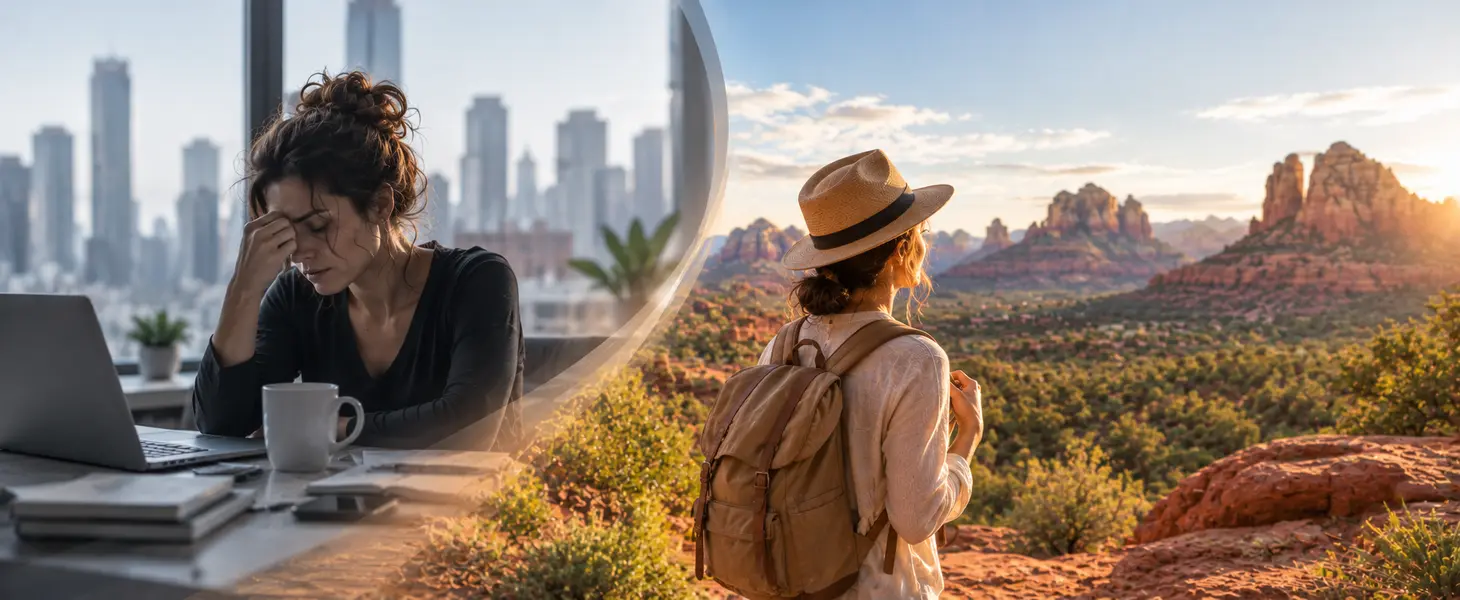
Nine friends once split the cost of a “luxury retreat” package at a big resort outside Scottsdale. They got a shared conference room, a buffet line, and a schedule built for 60 people they’d never met. They came home with a receipt and not much else.
That’s the problem with most online retreat advice. It assumes you’re planning for a headcount of 50 or more, complete with breakout sessions and name badges. If your group is 5 to 15 people, whether that’s a close friend circle, a family, a small spiritual community, or a team from a service business, the usual advice about managing large groups doesn’t really apply. A smaller retreat gives you more room to shape the experience around the people who are actually attending.
Learn what separates a small group retreat from a scaled-down version of a big one, the venue types worth comparing, how to tell if the experience actually did what you hoped, and more.
Table of Contents
- What Makes a Small Group Retreat Different From a Large Group Getaway?
- 3 Ways Intimacy Changes Your Small Group Retreat Experience
- 3 Small Group Retreat Locations Worth Comparing
- Frequently Asked Questions About Small Group Retreats
- Find the Right Small Group Experience at Sedona Mago Center Retreat & Wellness
What Makes a Small Group Retreat Different From a Large Group Getaway?
Small group retreats offer more flexibility to focus on why your group is there in the first place. With fewer people to accommodate, the schedule, activities, and overall experience can reflect your group’s goals rather than the needs of dozens of other attendees.
Large resort retreats run on a fixed schedule that has to work for everyone at once. With 60 or 80 people in a room, an instructor can’t stop to check on someone struggling with a breathing exercise or adjust the pace for someone with a bad knee. You get generic instruction because generic is the only thing that scales. And in a crowd that size, it’s easy to feel like just another name on a list. Conversations often stay surface-level, and nobody’s actually watching or listening for you specifically.
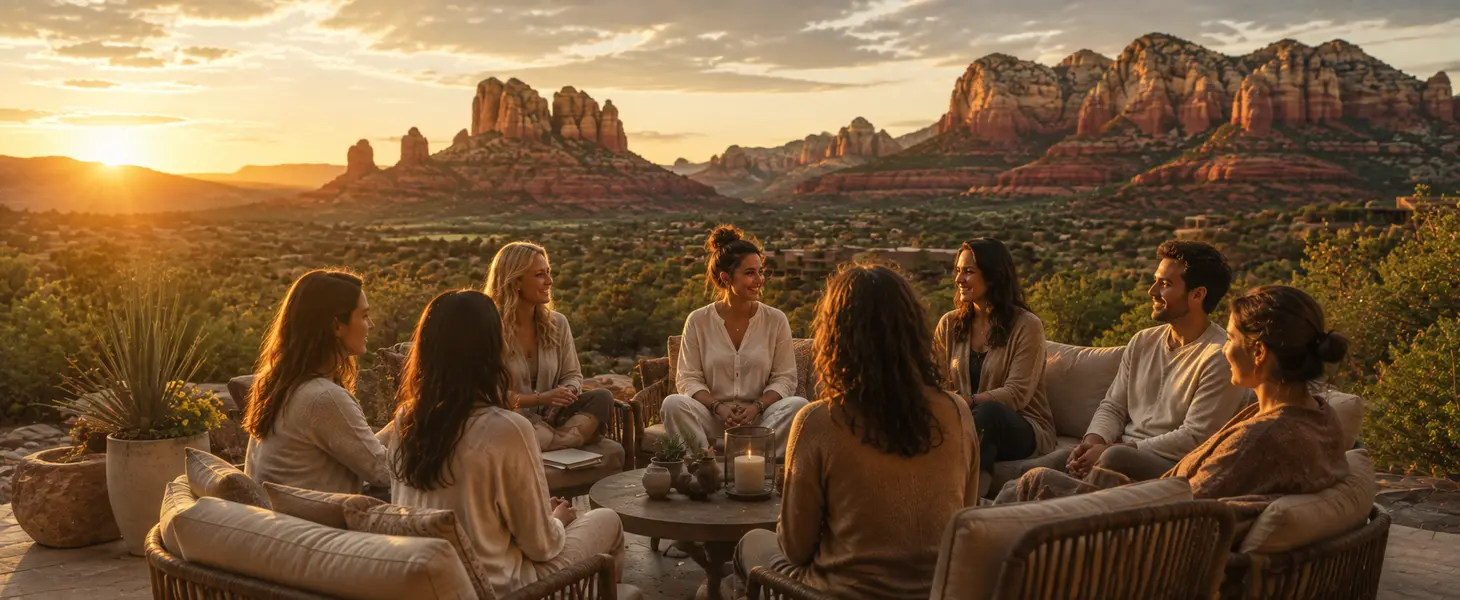
Small groups don’t have this problem. A retreat for nine close friends, a family of 12, or a spiritual circle of six can be shaped around what that particular group actually needs, whether that’s space for personal growth, quiet time to process something difficult together, or simply the chance to reconnect without distraction. Research on group experiences consistently shows that shared, personalized activities carry more weight in how people describe personal growth than generic group activities do.
At Sedona Mago, we take the time to understand your group, why you’re coming together, and what you want the experience to include. From there, we can help shape a retreat that makes sense for your group size and purpose.
If you’re weighing whether a retreat like this fits your group, reach out. Tell us your group size and what you’re hoping to get out of your time together, and we’ll help you figure out what actually makes sense, rather than fitting you into a package built for someone else.
3 Ways Intimacy Changes Your Small Group Retreat Experience
#1: Retreats Are Built Around Your Group’s Needs
A group of 9–12 people can name one real thing they want to work on together, whether that be reconnecting after a hard year or just slowing down enough to actually talk. A retreat of this size can build its days around that single need.
A small group might identify a need for structured time for reflection and honest conversation, not just downtime by a pool. A 60-person retreat can’t accommodate that kind of specificity. The itinerary has to serve the average attendee, which means it serves almost nobody particularly well.
At Sedona Mago, we structure our programs around the group in front of us, adjusting pacing, practices, and free time based on what that specific group tells us they need.
#2: Guided Practices Work Differently in Small Groups
Qigong is a slow, intentional style of movement paired with controlled breathing, meant to build awareness of posture and tension. It’s a practice that depends on an instructor being able to watch you move.
In a room of 50, an instructor demonstrates once and hopes everyone follows along correctly. In a room of eight, the instructor can walk over, adjust your stance, and explain why it matters.
That difference compounds over a multi-day retreat. Small groups get individual corrections. Large groups get a single demonstration and a lot of guessing.
Sedona Mago’s small group retreat ideas are often built around structured self-reflection and Tao yoga work specifically because the group stays small enough for that kind of attention.
#3: Intimate Settings Help the Nervous System Settle
Your parasympathetic nervous system is the part of your nervous system that signals to your body that it’s safe to rest, digest, and recover. It’s the opposite of the fight-or-flight response, and it’s harder to activate in a crowded, noisy environment.
Fewer people and less ambient noise seem to help that system settle faster. A quiet desert landscape, without the hum of a conference hotel or the constant low-grade stimulation of dozens of strangers, gives your body less to filter out.
Sedona’s Red Rock desert does more than provide a beautiful setting. For a small group, the natural surroundings can shape how the practices are experienced.
3 Small Group Retreat Locations Worth Comparing
Venue choice shapes the entire retreat dynamic more for small groups than it does for large ones. A mismatched venue can undo everything else you’ve planned.
Here are a few types you may want to examine to see if they meet your small group’s needs.
#1: Private Home or Villa Rentals
Renting a house through a platform like Airbnb or VRBO gives your group total control over the space and schedule.
- Pro: You set the schedule, the meals, the guest list. Nobody else is on the property.
- Con: Your group becomes the event staff. Meals, cleaning, and logistics fall on whoever’s willing to organize them, which can turn a retreat into unpaid labor for one person.
#2: Boutique Hotel Buyouts
Reserving every room at a small property gives you privacy without taking on the logistics yourself.
- Pro: Staff handles meals, housekeeping, and setup. Nobody in your group has to play innkeeper.
- Con: Many boutique properties still price rooms, or set minimum stays, based on assumptions built for larger groups. A property built for wedding blocks doesn’t always flex well for eight people on a weekend.
#3: Dedicated Retreat Centers Built for Small Groups
A retreat center like Sedona Mago easily structures small group retreat programming, meals, and lodging specifically for parties of 15 or less, rather than treating small groups as an afterthought to a 50-person minimum.
What’s different? There’s no penalty for being small. Pricing and programming assume your group’s actual size instead of forcing you to pay for capacity you’ll never use.
A small group retreat at Sedona Mago combines Korean yoga, Qigong, guided reflection, and shared meals designed around your group’s size from the start instead of working from a bigger template and sizing down.
Frequently Asked Questions About Small Group Retreats
What Is the Ideal Size for a Small Group Retreat?
Most small group retreats work best with 5–15 people. That range stays small enough for real customization and individual attention while still holding onto the group energy that makes a retreat feel like a shared experience.
How Much Does a Small Group Retreat Typically Cost?
The cost of a small group retreat can vary widely depending on where you stay, how long you’re there, and what’s included.
A private rental may have a lower upfront price, but your group will typically be responsible for planning meals, activities, transportation, and other details. Retreat centers may cost more initially, but lodging, meals, guided programming, and other amenities are often bundled together.
When comparing options, look at the total experience rather than the nightly rate alone.
Can a Small Group Retreat Accommodate Different Schedules or Fitness Levels Within the Same Group?
Yes. Lower instructor-to-participant ratios mean pacing, practice intensity, and daily schedules can flex to fit different needs inside the same group, something a 60-person retreat with one fixed itinerary can’t offer.
How Can We Tell If Our Small Group Retreat Was Successful?
Think back to what your group hoped to get from the retreat in the first place. Did you have the conversations, experiences, or time together you needed? Do people leave feeling more connected, refreshed, or clear about what comes next? A successful retreat should feel meaningful to the people who attended, even if each person takes something slightly different away from it.
Find the Right Small Group Experience at Sedona Mago Center Retreat & Wellness
Intimacy, not headcount, is what makes a retreat feel like it actually mattered. A private home gives you control. A boutique hotel gives you staff support. A dedicated retreat center gives you both, with an environment and programming designed to help a smaller group connect, participate, and get more from their time together.
The right choice depends on what your group needs, whether that’s total flexibility, hands-off logistics, or guided practices that encourage deeper connection and personal growth.
At Sedona Mago Retreat & Wellness, small groups can experience many of the practices we’ve discussed as part of our signature Finding True Self retreat. Through guided movement, meditation, reflection, and time in Sedona’s natural surroundings, the program creates space to reconnect with yourself while sharing the experience with others.
Explore Finding True Self or contact us today to learn more about planning your retreat at Sedona Mago.
Recent Posts