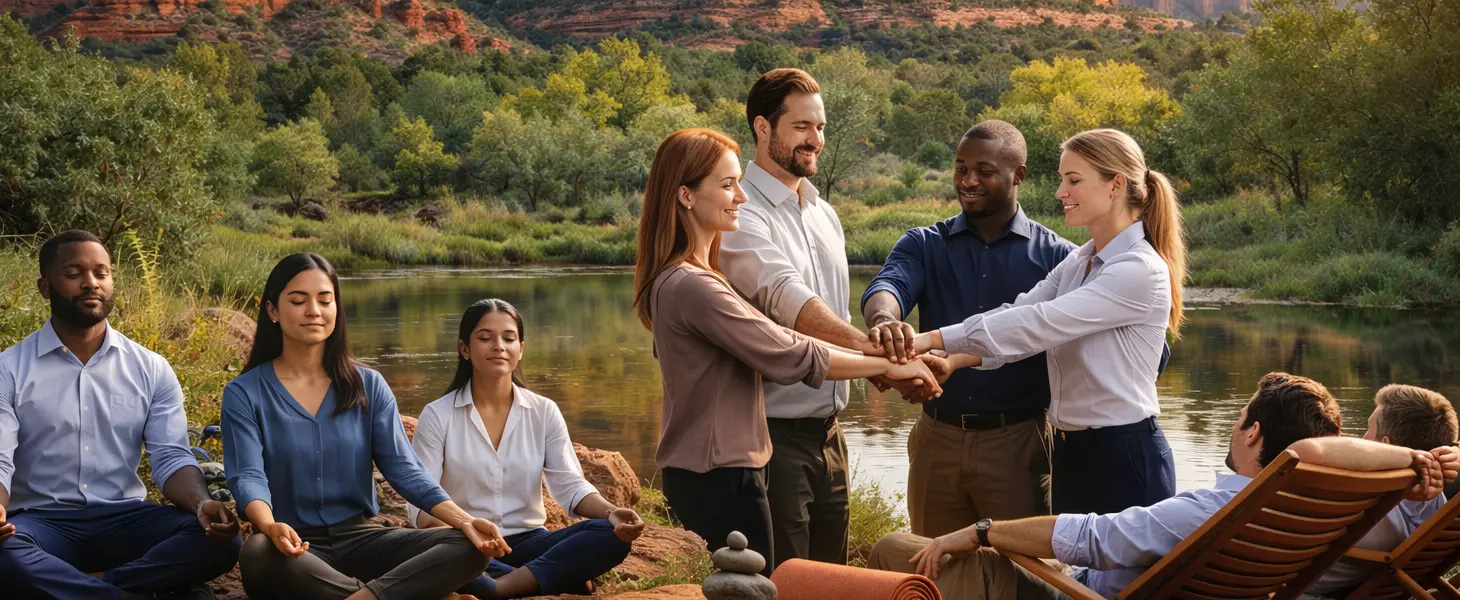
If you’re searching for fresh team-building ideas, you’ve likely run through the usual list of escape rooms, volunteer days, or a trip to the local brewery. And while these outings can be fun in the moment, their value is often fleeting. Come Monday, your team is still burnt out, and communication is still rocky.
That’s why meditation retreats are grabbing attention — they’re both a luxury escape your employees will appreciate, and a structured way to help teams reset and succeed together. More than a wellness trend, mindfulness-based retreats help build long-lasting emotional intelligence, creativity channels, and resilience.
In this article, we’ll unpack what a meditation retreat for teams actually involves and explore the tangible benefits backed by research. You’ll also learn how to design an effective retreat experience, make the most of the lessons afterward, and decide whether it’s the right fit for your team’s goals.
Table of Contents
- Understanding the Concept of Meditation Retreats for Teams
- 4 Tangible Benefits of Meditation Retreats for Team Building
- Designing a Successful Meditation Retreat for Your Team
- Maximizing the Impact After the Retreat
- Is a Meditation Retreat Right for Your Team?
- Experience the Ultimate in Team Building at Sedona Mago Center for Well-Being and Retreat
Understanding the Concept of Meditation Retreats for Teams
Meditation retreats are a powerful approach to team development because, unlike traditional corporate settings that are performance-focused, they emphasize rest and internal awareness. They’re designed to help participants quiet any mental distractions, manage stress, and reconnect with their sense of purpose — skills that translate directly into better engagement and focus at work.
At Sedona Mago Center for Well-Being and Retreat, this philosophy comes to life through experiences that blend mindfulness practices with holistic growth. Participants are encouraged to slow down, reflect, and glean new insight into how they interact with others.
What Is a Meditation Retreat?
A meditation retreat is an opportunity for participants to step away from daily distractions and concentrate on mindfulness and self-awareness. For business teams, these retreats offer a serene environment where employees can recharge mentally and emotionally while developing practical skills to manage stress.
Most programs balance education, application, and reflection. Typical activities include:
- Guided meditation sessions: Led by experienced instructors who help participants learn techniques for focused breathing, mental stillness, and emotional regulation.
- Mindfulness workshops: Interactive sessions that explore how awareness and presence can improve communication, creativity, and leadership in the workplace.
- Nature immersion: Walks or quiet reflection periods outdoors, allowing participants to slow down and gain perspective away from digital and professional noise.
- Wellness activities: Gentle movement, stretching, or holistic practices that support relaxation and body awareness.
- Personal reflection time: Unstructured moments for journaling or introspection, helping participants absorb lessons and set intentions for life and work.
These elements create programs that help busy, driven teams be still, open to learning, and ready for personal growth.
Why Meditation Works for Corporate Teams
Meditation has science-based benefits on the mind and body that make it particularly valuable for corporate teams. Some key benefits include:
- Stress reduction: Meditation helps lower cortisol levels, the body’s primary stress hormone, making it easier for employees to navigate deadlines, conflicts, and high-pressure situations without becoming overwhelmed.
- Improved focus and decision-making: Mindfulness trains the brain to notice distractions and return attention to the task at hand. Teams that practice meditation often experience better concentration during meetings and more thoughtful problem-solving.
- Enhanced creativity and innovation: By quieting the racing thoughts that dominate busy workdays, meditation creates space for new ideas to emerge. Teams may find it easier to brainstorm, adapt, and approach challenges from fresh perspectives.
- Emotional regulation and empathy: Awareness of one’s own thoughts and feelings can improve communication and reduce reactive responses. This supports collaboration, conflict resolution, and stronger interpersonal relationships within the team.
As people strengthen their own mindfulness and emotional regulation, the team as a whole operates more cohesively, innovatively, and calmly under stress.
4 Tangible Benefits of Meditation Retreats for Team Building
#1: Improved Communication and Collaboration
Meditation retreats train team members to be cognizant of their own impulses and thought patterns, making it easier to engage with others constructively. By practicing intentional awareness, employees actively listen and respond thoughtfully in conversations.
Activities like guided reflection or paired mindfulness exercises give participants opportunities to explore patience and consider different viewpoints. These habits thrive in the workplace, helping reduce miscommunication, smooth tough interactions, and encourage meaningful dialogue.
#2: Enhanced Stress Management and Resilience
The program gives you practical tools to recognize and regulate stress before it becomes consuming. Through focused breathing, body scans, and mindful reflection, employees are able to feel tension rising early and react with composure rather than pure emotion.
Stress management contributes to higher morale as employees feel capable of tackling challenges without overwhelming pressure or confrontation.
#3: Fostering Creativity and Problem-Solving
Meditation and reflective practices give the mind space to move beyond habitual patterns, unlocking new ways of thinking. By stepping away from constant task-focused activity, team members create room for fresh perspectives and imaginative solutions.
During a retreat, exercises such as guided visualization, journaling, or mindful observation encourage employees to explore ideas without judgment. This practice of deliberate reflection helps teams adapt to change, consider multiple angles, and think of innovative strategies that might not surface in a typical workday.
#4: Strengthening Trust and Team Cohesion
When teams share meaningful experiences, genuine connection follows. A meditation retreat provides a supportive setting for group reflection and guided mindfulness exercises, giving employees the chance to witness how their colleagues think, respond, and engage in a safe, judgment-free environment.
These shared moments build empathy and mutual respect, helping participants recognize and value one another’s strengths and working styles. As the group moves through the retreat together, individual self-awareness deepens, relationships strengthen, and team dynamics naturally grow more cohesive.
Designing a Successful Meditation Retreat for Your Team
Choosing the Right Location and Environment
The environment of a meditation retreat sets the tone for the entire experience. A peaceful, natural setting helps teams disconnect from daily life and settle into a more reflective state of mind. The surroundings should invite calm, encourage openness, and make it easy for participants to slow their pace.
Sedona Mago offers an ideal atmosphere for this kind of experience. Its sweeping red rock formations and quiet desert landscape naturally inspire clarity and grounded awareness. Indoor and outdoor spaces flow together, creating places for guided meditation, mindfulness sessions, and quiet reflection.
Structuring Activities for Maximum Impact
A well-designed schedule is key to a meditation retreat. A balance of guided practices and personal reflection helps participants absorb the experience.
For maximum impact, retreats often combine:
- Guided meditation sessions: Instructors lead participants through focused breathing, visualization, or awareness exercises that strengthen emotional regulation.
- Yoga or mindful movement: Gentle movement practices help participants connect with their bodies, release tension, and maintain focus throughout the day.
- Group workshops: Interactive sessions explore mindfulness techniques, stress management, and collaboration skills, allowing teams to apply insights in a supportive setting.
- Free reflective time: Periods of unstructured time let individuals process what they’ve learned, journal, or enjoy quiet walks in nature.
This creates a rhythm that supports growth and allows lessons to stick. Teams leave with tools they can integrate into their daily work and lives.
Setting Goals and Expectations
Organizations can make the most of the retreat by going into it with defined goals and objectives. Whether it’s improving collaboration, reducing stress, boosting creativity, or strengthening trust, concrete goals help guide the choice of activities and ensure they’re aligned with the team’s needs.
Equally important is determining what success looks like. Consider how outcomes will be measured, whether through participant feedback, observed changes in communication, or follow-up evaluations in the workplace.
Maximizing the Impact After the Retreat
To get the most value from a meditation retreat, teams need to intentionally bring the lessons back into daily work life. Here are practical strategies for sustaining the benefits:
- Encouraging daily mindfulness practices: Incorporate short meditation sessions, focused breathing exercises, or brief moments of reflection throughout the workday. Even just a few minutes in the morning, between meetings, or before challenging tasks can help employees manage stress, maintain clarity, and approach decisions with calm attention.
- Team check-ins and follow-up activities: Schedule post-retreat workshops, small group discussions, or guided mindfulness sessions to reinforce the concepts introduced during the retreat. These check-ins allow team members to share experiences, celebrate progress, and continue building a supportive culture of awareness and collaboration.
Measuring long-term success: Track improvements in collaboration, stress management, and overall team performance using surveys, engagement metrics, or observational feedback. Monitoring these outcomes over time helps quantify the retreat’s impact and informs future team-building initiatives.
Is a Meditation Retreat Right for Your Team?
A meditation retreat can be a powerful catalyst for growth, offering teams an opportunity to recharge, refocus, and strengthen how they work together. To determine if it’s the right fit, consider how a retreat could support your culture, goals, and team dynamics.
Teams that stand to gain the most are those looking to:
- Enhance communication and collaboration: Foster clearer, more effective interactions and teamwork.
- Boost stress management and resilience: Equip employees with tools to stay composed and focused under pressure.
- Encourage creativity and problem-solving: Create space for fresh perspectives and innovative ideas.
- Strengthen trust and cohesion: Deepen interpersonal connections that improve overall team performance.
If these benefits align with your team’s priorities, a meditation retreat offers a unique, immersive environment to achieve them. Sedona Mago helps build a resilient team culture that extends well beyond the retreat itself.
Can a Retreat Be a Business Expense?
Yes. A meditation or team-building retreat can be considered a business expense if it is directly related to improving employee skills, collaboration, or well-being. Costs such as accommodations, program fees, and travel may be deductible, but it’s important to consult a tax professional for specific eligibility and documentation requirements.
Experience the Ultimate in Team Building at Sedona Mago Center for Well-Being and Retreat
For teams ready to recharge and reconnect, Sedona Mago Center for Well-Being and Retreat offers an experience that blends professional development with personal renewal. Surrounded by Sedona’s stunning red rocks, teams step into a calm, focused environment designed to restore balance and inspire growth.
Hit reset on your team’s mindset so they can grow and thrive together.
Recent Posts